"We're exchanging what we actually have," city attorney Trish Link told Austin's Environmental Commission on Oct. 21, "rather than the price tag that we cannot afford in cash." She was answering why the city is moving quickly on the Muny agreement, as Austin Current reported.
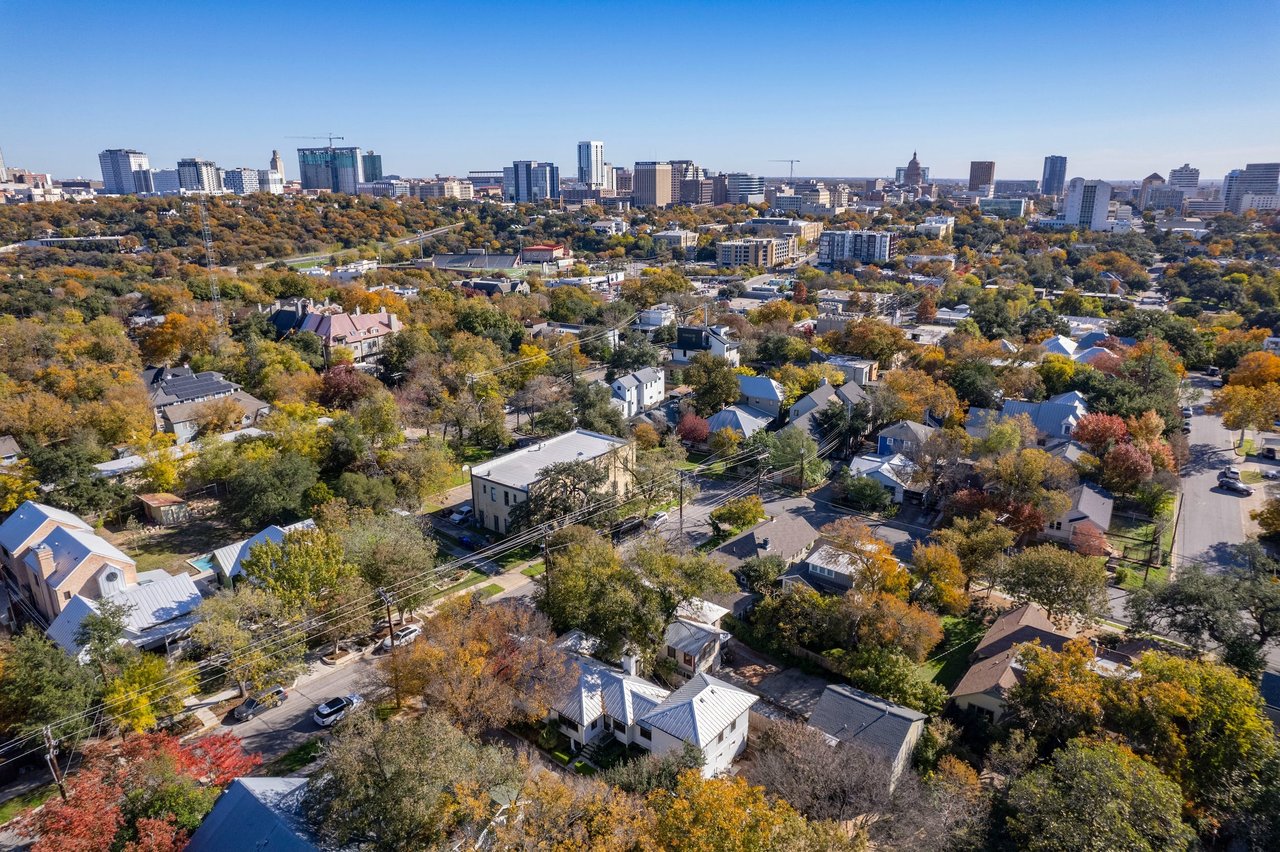
What the city actually has is its say over how the University of Texas develops the land around the golf course. The headline from Oct. 14 was that Lions Municipal Golf Course would finally belong to Austin. The agreement City Council takes up on Nov. 19 deals mostly with the 190.26 acres of UT land along Lake Austin Boulevard, which sit right next to Tarrytown.
Muny has never belonged to Austin. The Austin Lions Club leased the University land in 1924 to build the course, and the city took over the lease in 1936 or 1937. The pressure has been building since 1972, when UT regent Frank Erwin tried to cancel the lease and started the first "Save Muny" campaign. The 1987 lease has been amended and extended five times. The most recent extension, in May 2020, left the course on a month-to-month basis.
The scale explains why a straight purchase was never realistic. Community Impact reported that the 155 acres holding Muny and the West Austin Youth Association campus are appraised at more than $680 million. Under the proposal, Muny would go to the city and WAYA's campus would go to the youth sports nonprofit. The Austin American-Statesman described the donors who made the deal possible as anonymous, longtime Austinites. Their contributions were not disclosed.
Gifts close part of that gap. The rest comes from rewriting the 1989 Brackenridge Development Agreement, the interlocal agreement that sets how UT can develop its land on both sides of Lake Austin Boulevard for non-university purposes. Muny's 141.4 acres and WAYA's 14.6 acres were left out of that agreement from the start. The land it covers holds UT student housing, the Brackenridge Field Laboratory, a youth sports complex and several commercial buildings. The city's own briefing makes the stakes clear: without the agreement, there are no development standards on that land.
The city's side-by-side comparison shows that the proposed rewrite moves in two directions. The land would get its first drainage, water-quality and heritage-tree rules. It would also get more room to build.
| Standard | 1989 agreement | Proposed amendment |
|---|---|---|
| Building height | Varies by tract | 65 feet along and north of Lake Austin Blvd; 105 feet south of the boulevard but not along it |
| Floor-to-area ratio | 0.4:1 and 0.45:1 | 0.6:1 across the whole area, with individual sites up to 5:1 |
| Multifamily density | 22 units per acre | No limit |
| Building coverage | 50% | 75% per site |
| Impervious cover | 30% single-family, 60% townhouse, 75% to 90% other uses | 75% overall, 85% per site, transferable between sites |
| Lady Bird Lake setback | 200 feet total | 200 feet total, unchanged |
| Drainage and water quality | Not defined | Current City Code |
| Heritage trees | No regulations | A compromise between City rules and UT's tree policy |
| Cut and fill, construction on slopes | No limits | No limits |
| Development review | Outside standard processes | Standard City review |
The height rule matters most for anyone who drives Lake Austin Boulevard every day. Buildings along the boulevard and on its north side, which faces Tarrytown, would be capped at 65 feet, and compatibility requirements would apply north of the road. The 105-foot limit would apply only to buildings south of the boulevard that do not front it. The city's summary also states that no building could be taller than 65 feet when measured from the boulevard. The overall 0.6:1 floor-area ratio also limits more than the number suggests. The lake, a tributary and the boulevard all require setbacks, so less than 190 acres can actually be built on. The city's comparison says sites developed late in the process could end up with little or no buildable area left.
The proposal also adds a 50-foot setback on each side of the minor waterway that crosses the tract.
The table covers what has been negotiated. The concerns raised at the Oct. 21 briefing were mostly about what has not.
The field lab. Brackenridge Field Laboratory covers 82 acres, and that land falls under the amended agreement. Austin Current reported that lab researchers worry about how new rules could affect their work. Research scientist Liz Bowman told commissioners the site supports 700 plant species and 160 bird species, along with nine greenhouses and an 18,000-square-foot lab. "Anything that's done to this land cannot be undone, and it should not be rushed," said Edward LeBrun, who works at the lab. One written public comment asked the city to map the lab and leave it out of development, and to apply its current cut-and-fill and slope rules to the tract.
Environmental features south of the boulevard. The 1989 agreement has no rules for critical environmental features. Under the proposal, the city and UT would study them on the land south of Lake Austin Boulevard first, then decide whether buffers are needed and how wide they should be.
Traffic. Holly Reed serves on the board of The Muny Conservancy and on the West Austin Neighborhood Group, and she belongs to the neighborhood working group studying the plan. She said the neighborhood is excited about the chance to save Muny but still needs answers. "We need more information from the university and the city on how the proposed new development will impact traffic and the environment," she told the commission, according to Austin Current.
What UT plans to build. UT has not settled on development plans for the remaining land, Community Impact reported. The Brackenridge Apartments would stay for the near term and could later be relocated and rebuilt elsewhere. The proposal commits to replacing the existing affordable student housing on the property, either on site or off.
Who pays for the pipes. Under the 1989 agreement, the city is responsible for planning, funding and building utility capacity to serve development on the tract. The city's briefing notes that the area is mostly undeveloped and lacks sidewalks and water and wastewater lines. The proposed fix is a Tax Increment Reinvestment Zone, which would pay for that infrastructure out of taxes on non-university development. According to the briefing, the TIRZ would have to comply with the affordable housing requirements in the city's TIRZ policy, and that housing could be on site or off.
Muny's longtime advocates are pushing ahead. "We are not across the finish line quite yet," Scotty Sayers, co-chair of The Muny Conservancy, said in the Conservancy's Oct. 14 statement. Co-chair Ben Crenshaw added, "But this is not the time to let up." Ken Tiemann, co-chair of the Save Historic Muny District, told Austin Current he has "complete confidence that UT is going to do something fabulous with the remainder of the land." Kirk Watson created that district through legislation he sponsored as a state senator in 2019.
Under the city's published schedule, Council's Nov. 19 vote is the first of several steps.
The conveyance comes last. Muny stays on its month-to-month lease until the spring 2027 steps are finished. Assistant City Manager Eric Johnson told commissioners that staff had not yet briefed Council offices and planned to do so as the proposal is refined.
Daily life at 2901 Enfield Road goes on as usual. Weekday tee times open online seven days ahead at 9 a.m., and weekend tee times open the Monday before at 8 p.m. GolfATX's current rates, in effect since Oct. 1, 2025, are $35 Monday through Thursday, $41 on Fridays and $44 on weekends and holidays. Junior rounds are $20. The Muny Conservancy calendar lists maintenance closures on Monday, Nov. 16, three days before the Council vote, and again on Monday, Dec. 21.
The course hosts more than 75,000 rounds a year. In 1950 it became the first public golf course in the South to integrate, and it is listed on the National Register of Historic Places.
The heights, density limits and buffers being set on the land across Lake Austin Boulevard will shape Tarrytown's western edge for decades. As a fourth-generation Austinite, Anna Lee follows the Brackenridge process closely and can explain how it relates to the streets around a home you own or are considering. Schedule a private consultation to talk it through.
3825 Lake Austin Blvd Ste 501 Austin TX 78703
3825 Lake Austin Blvd Ste 501 Austin TX 78703