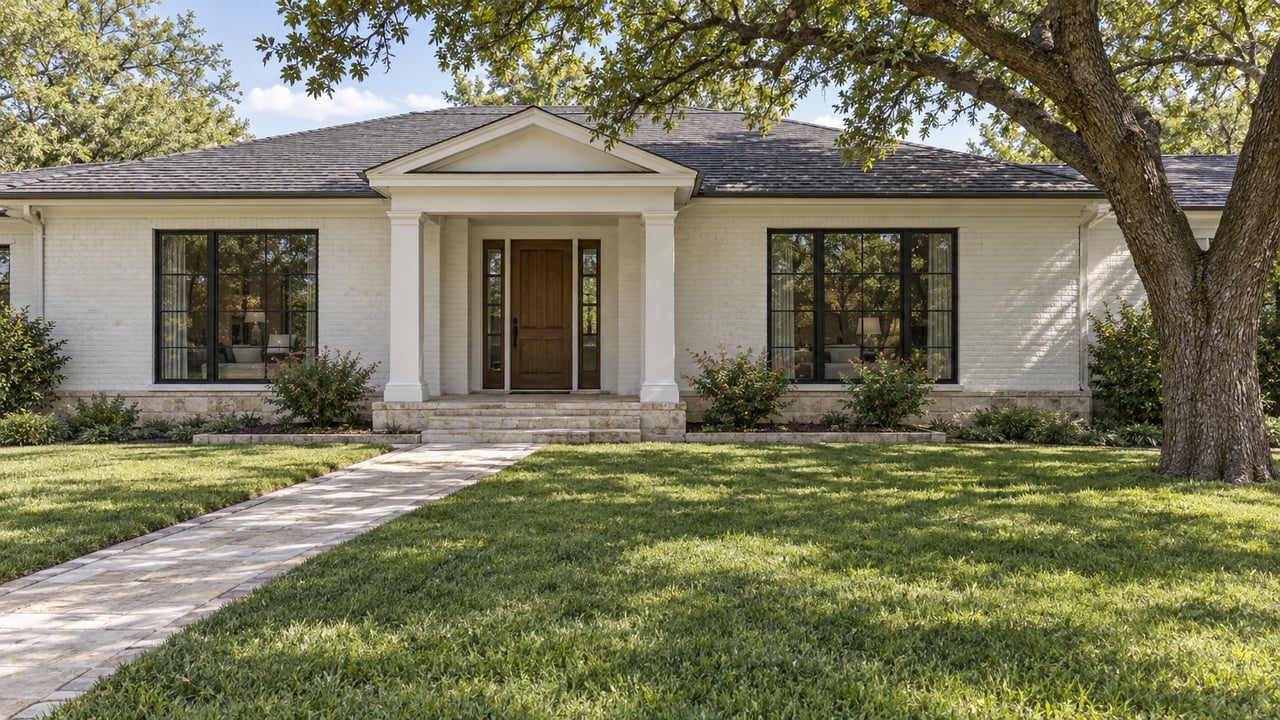
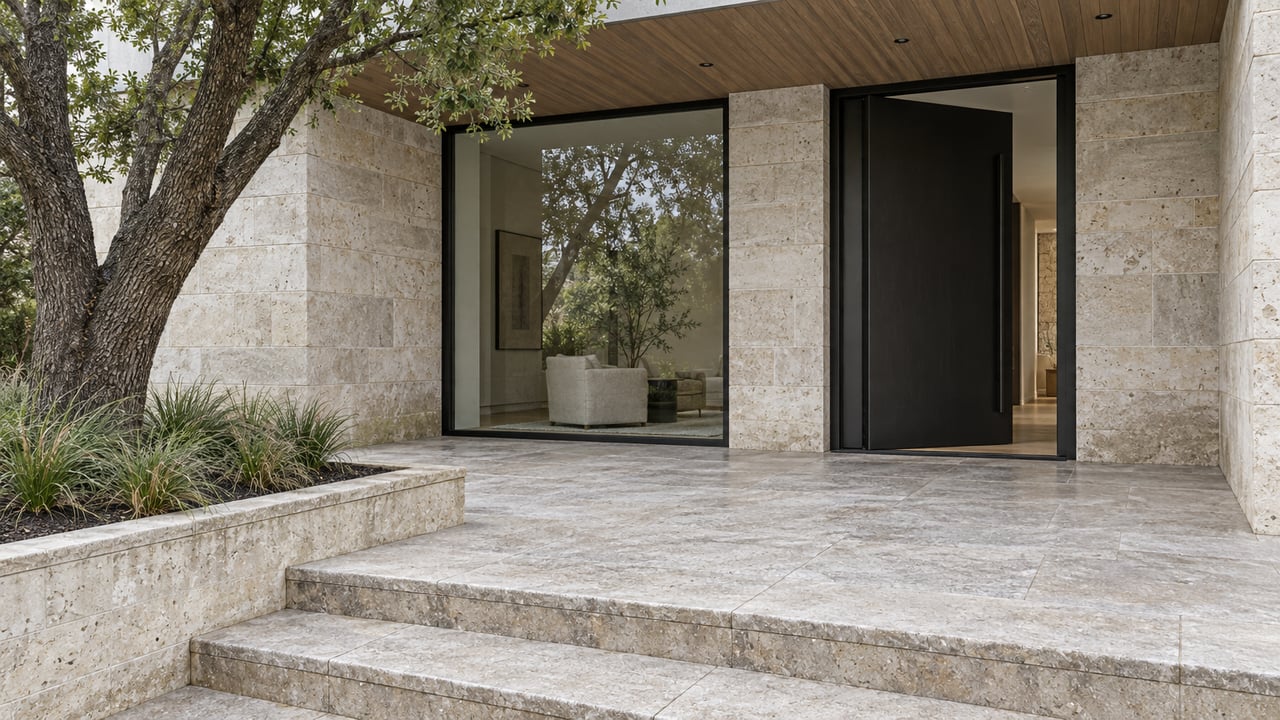
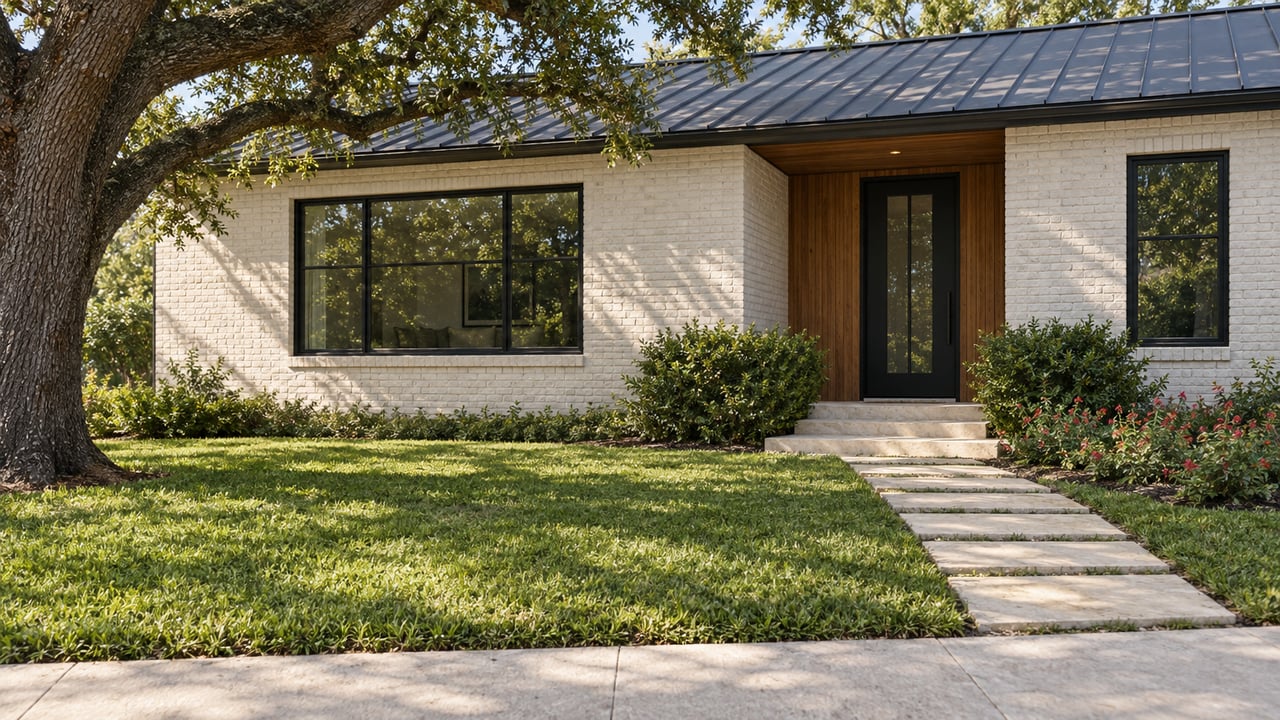
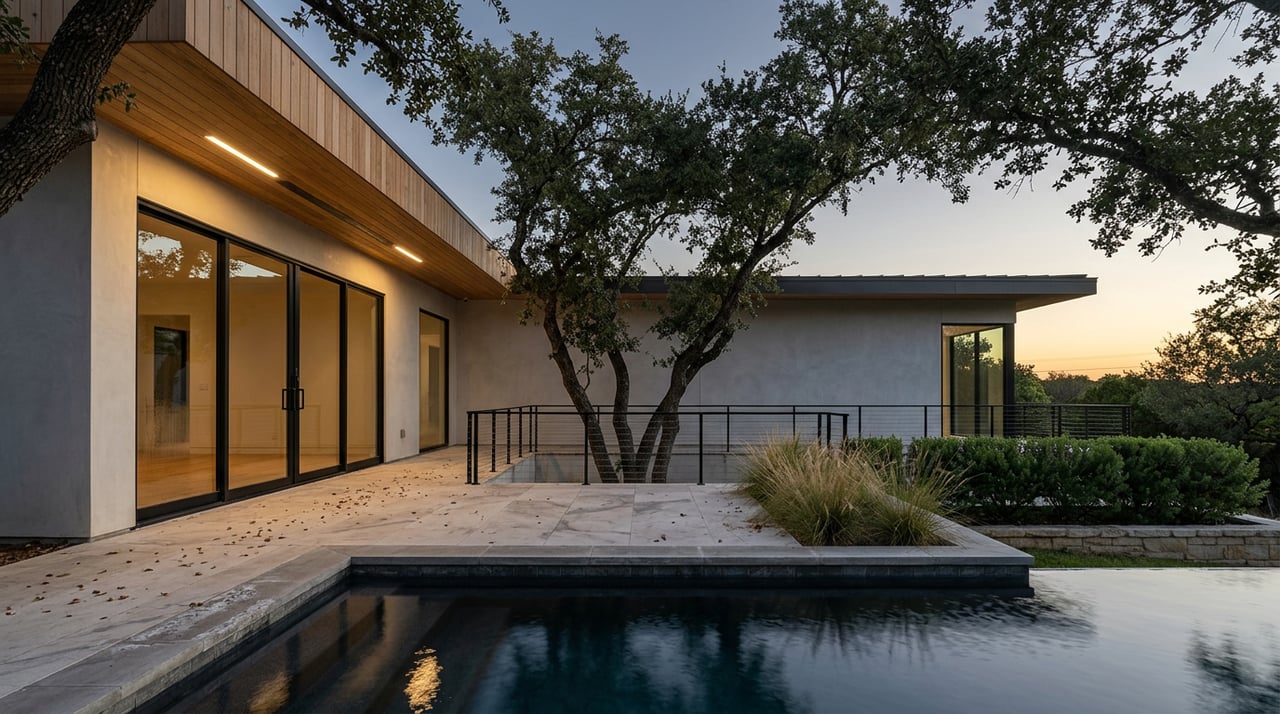
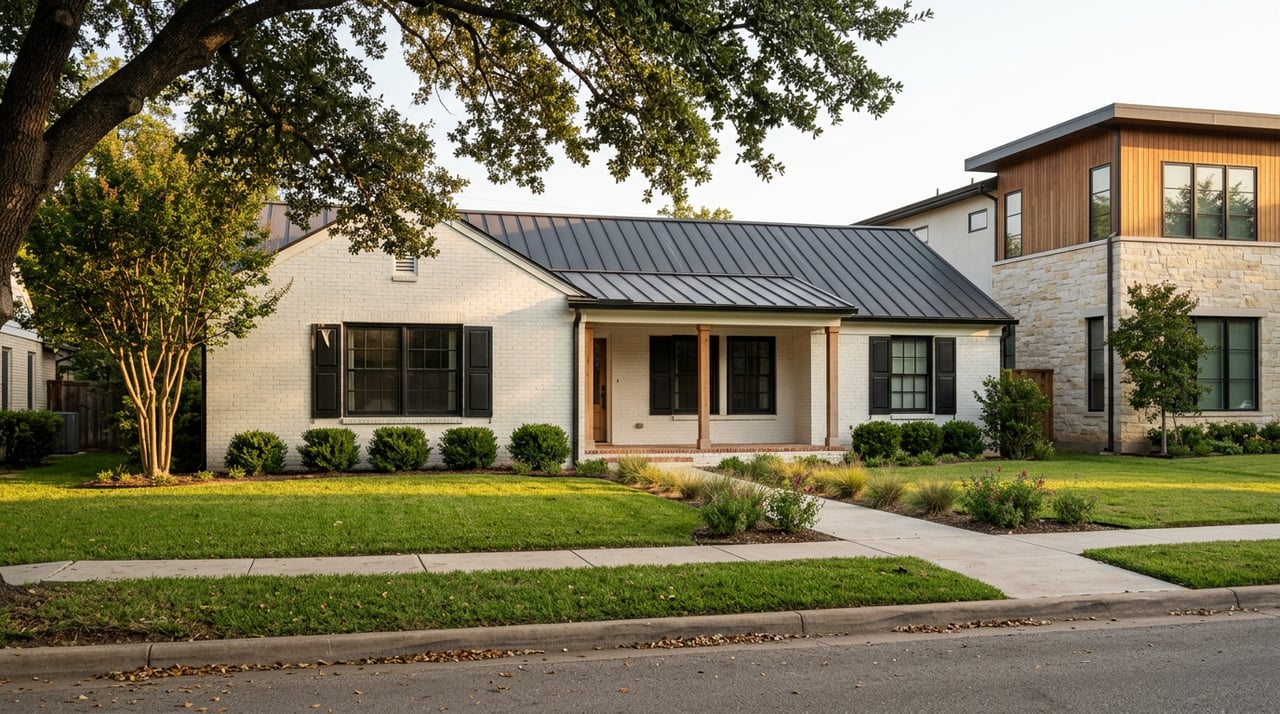
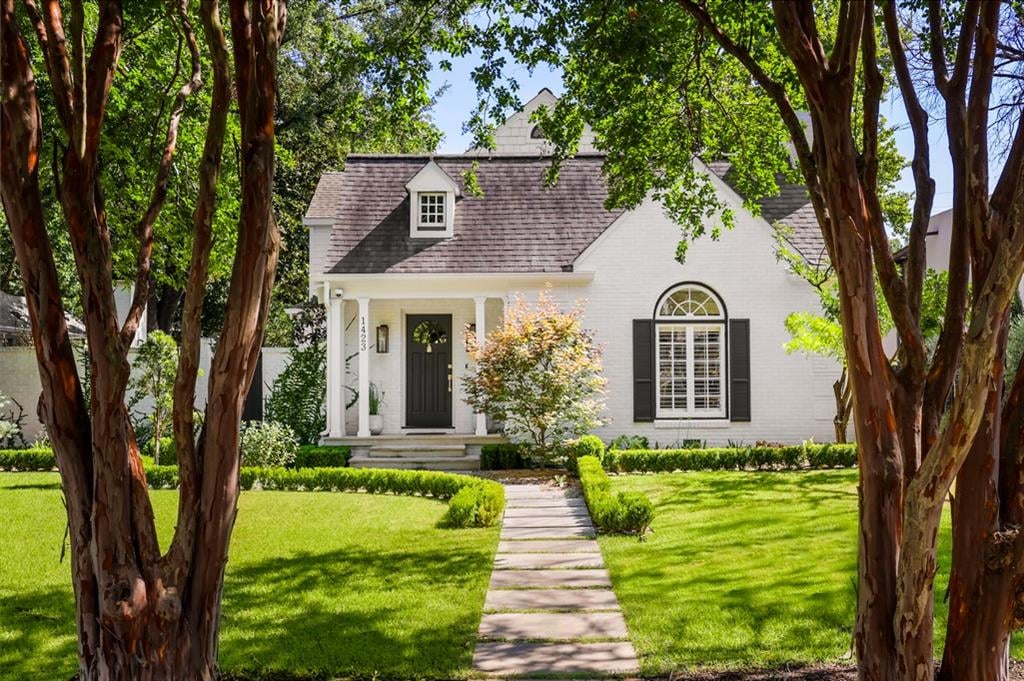
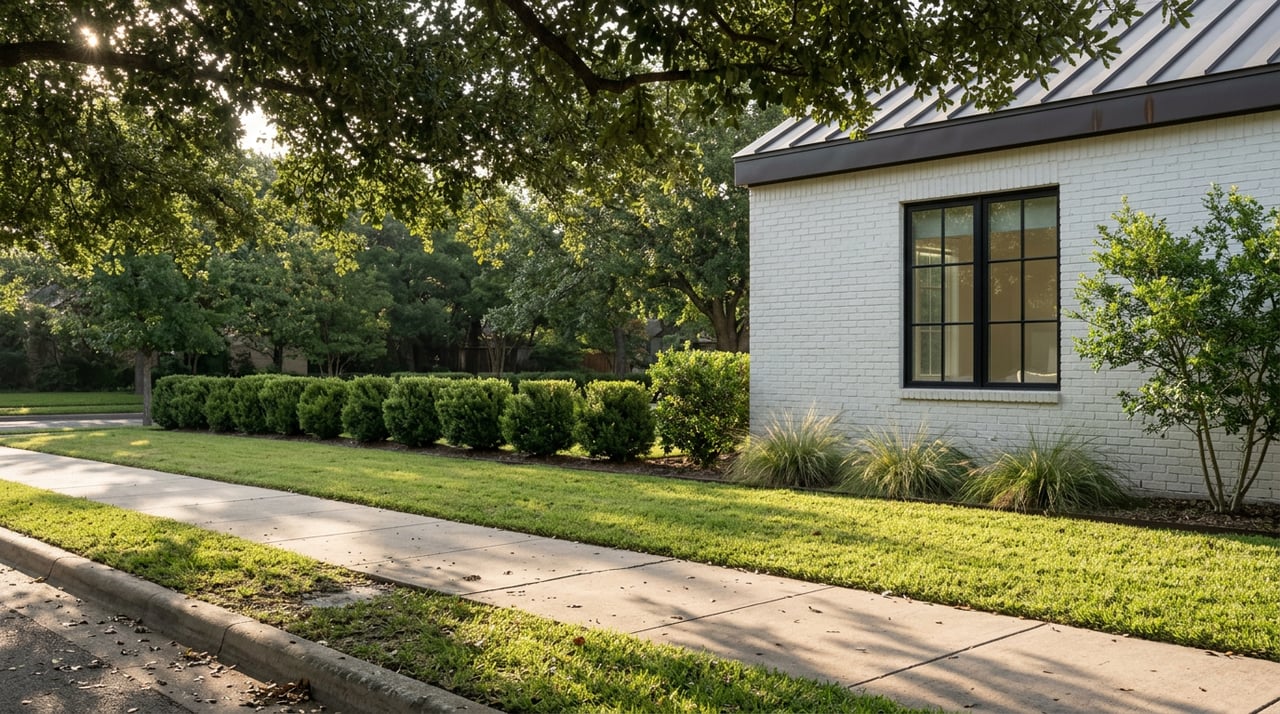
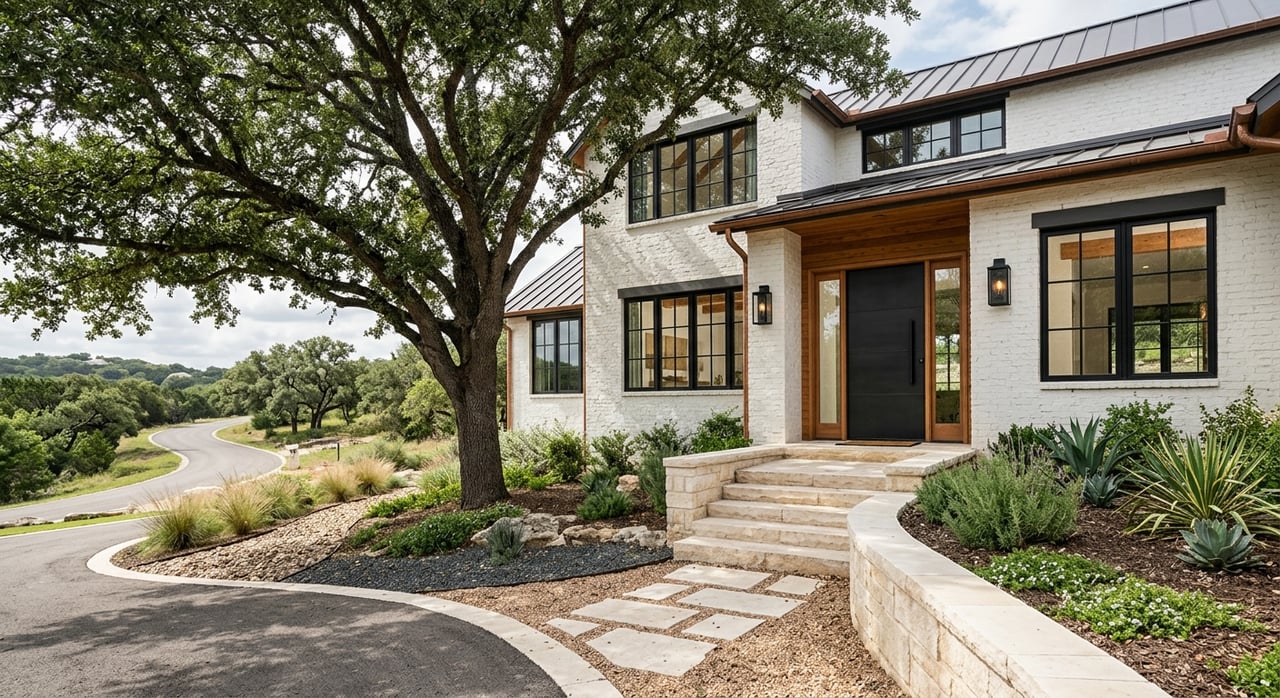
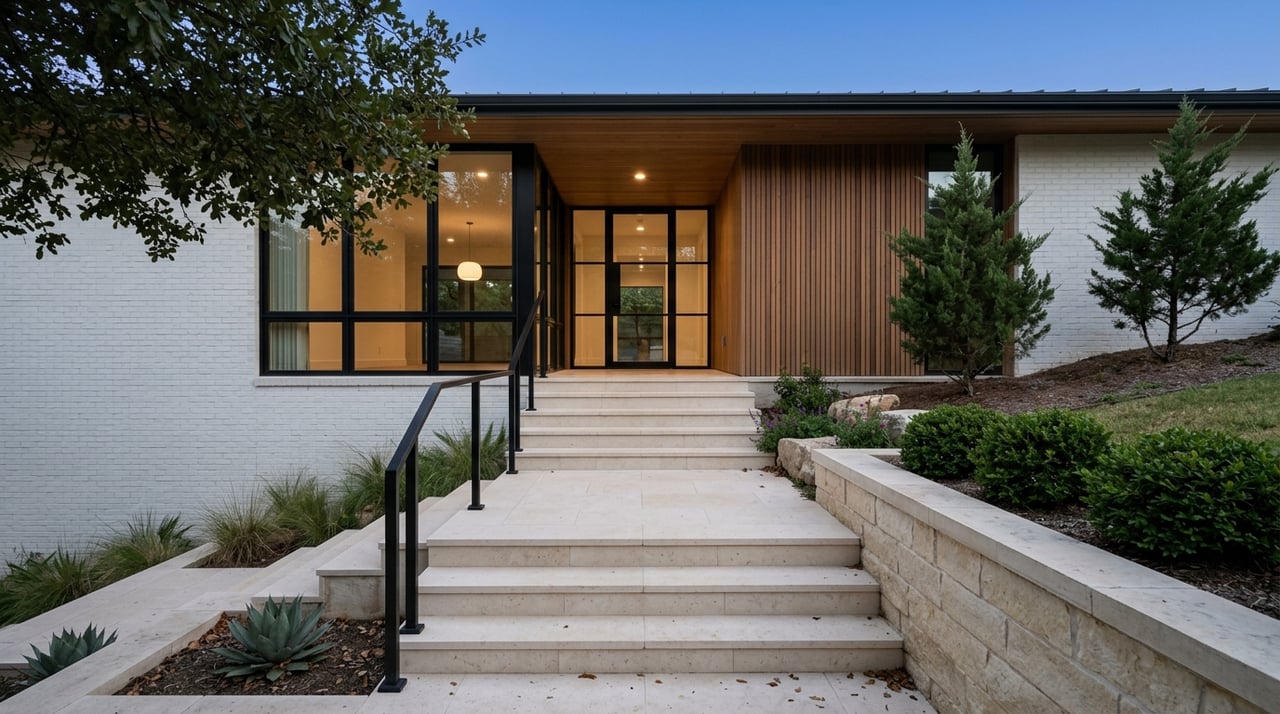
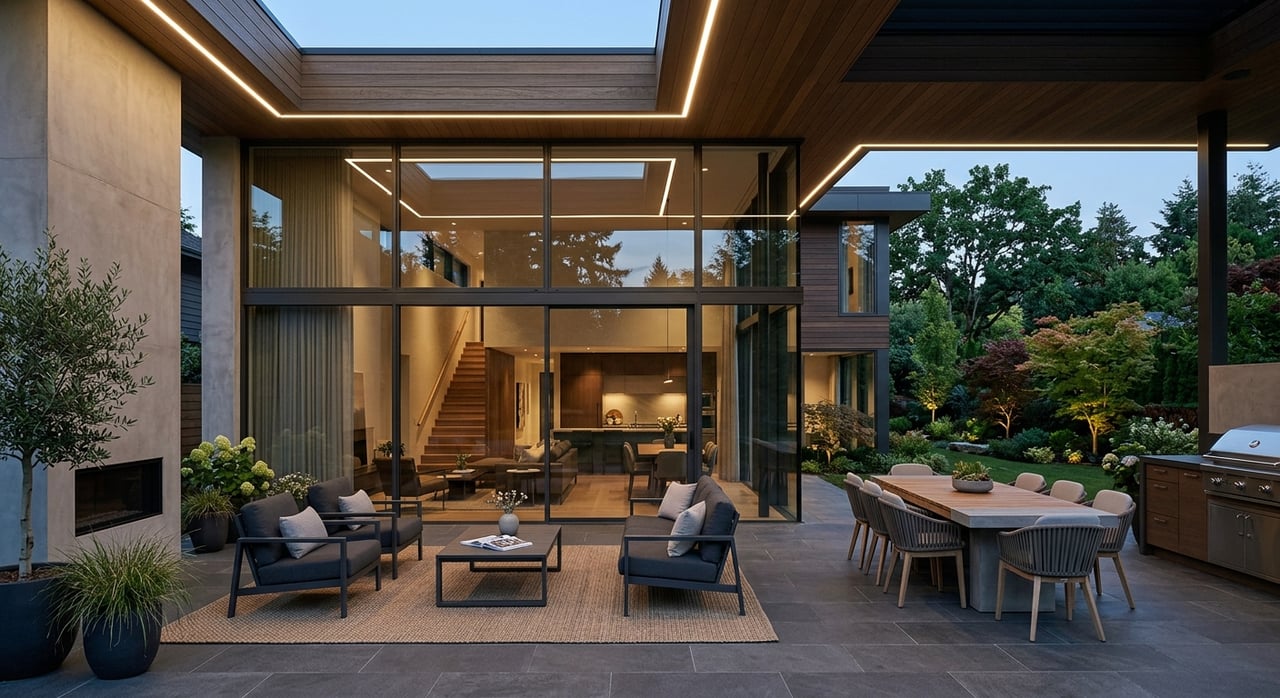
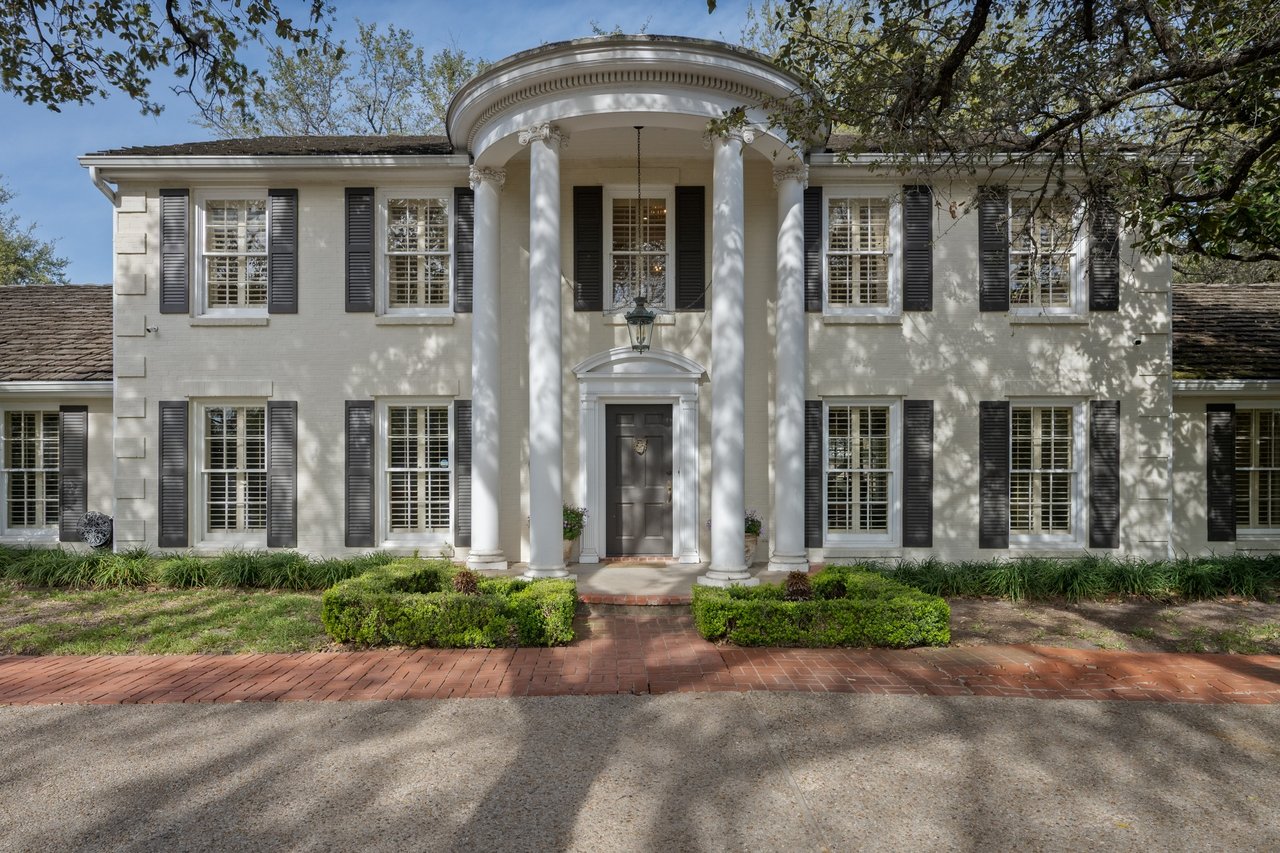
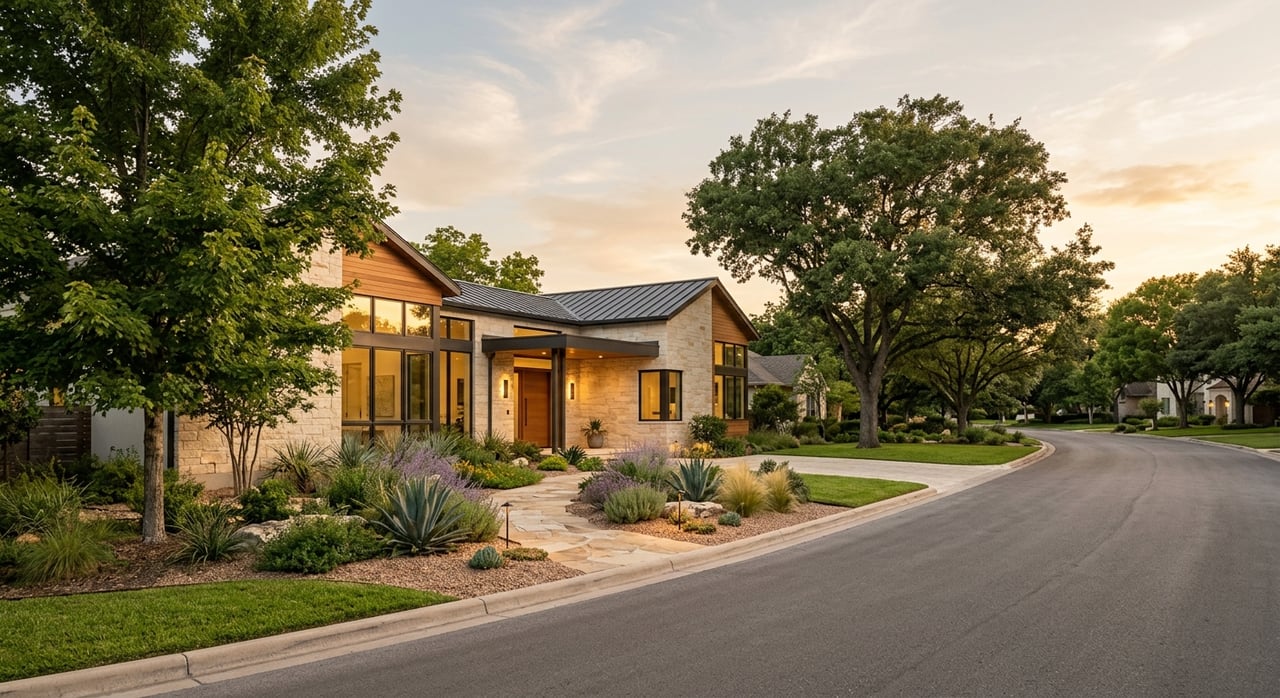
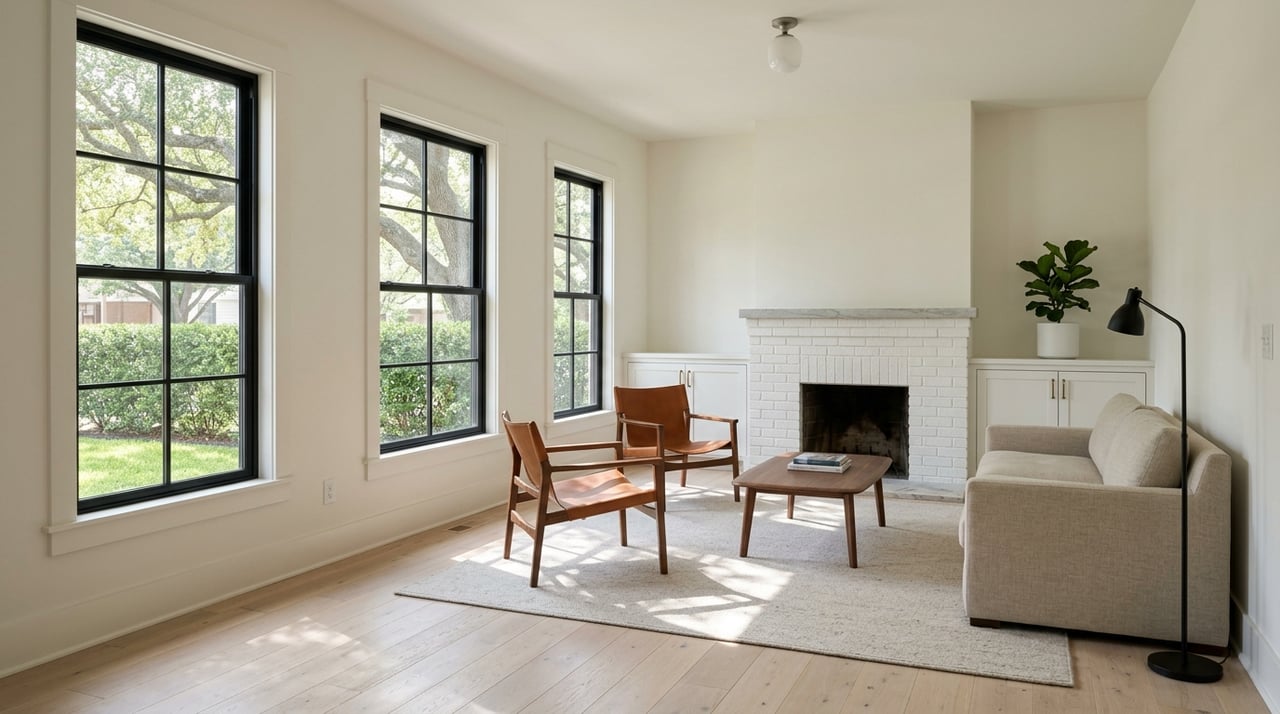
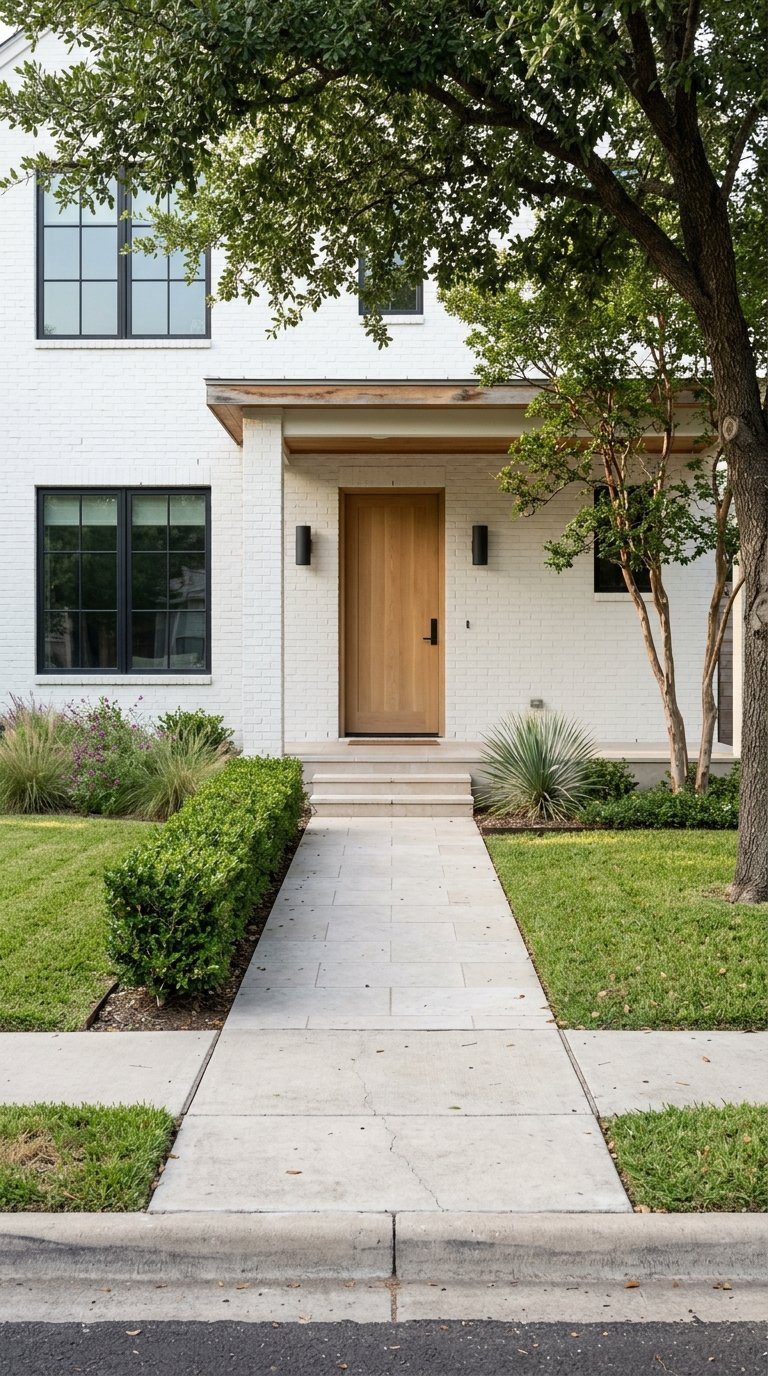
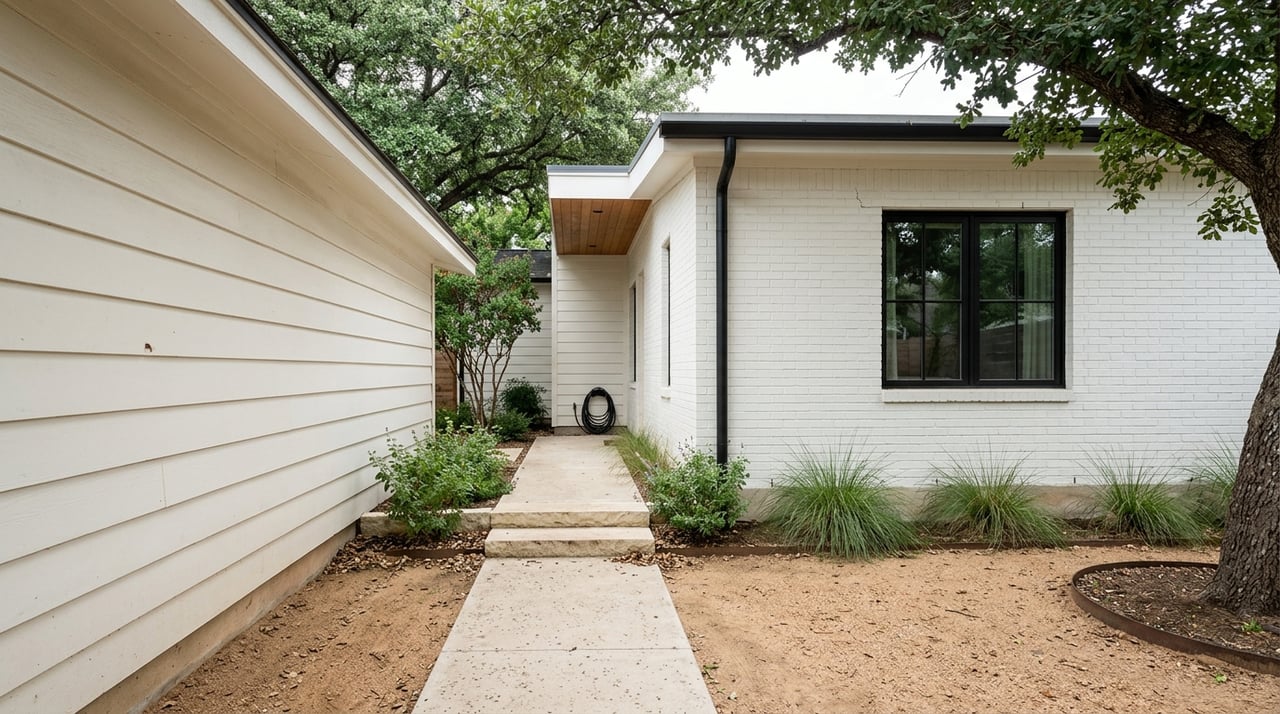
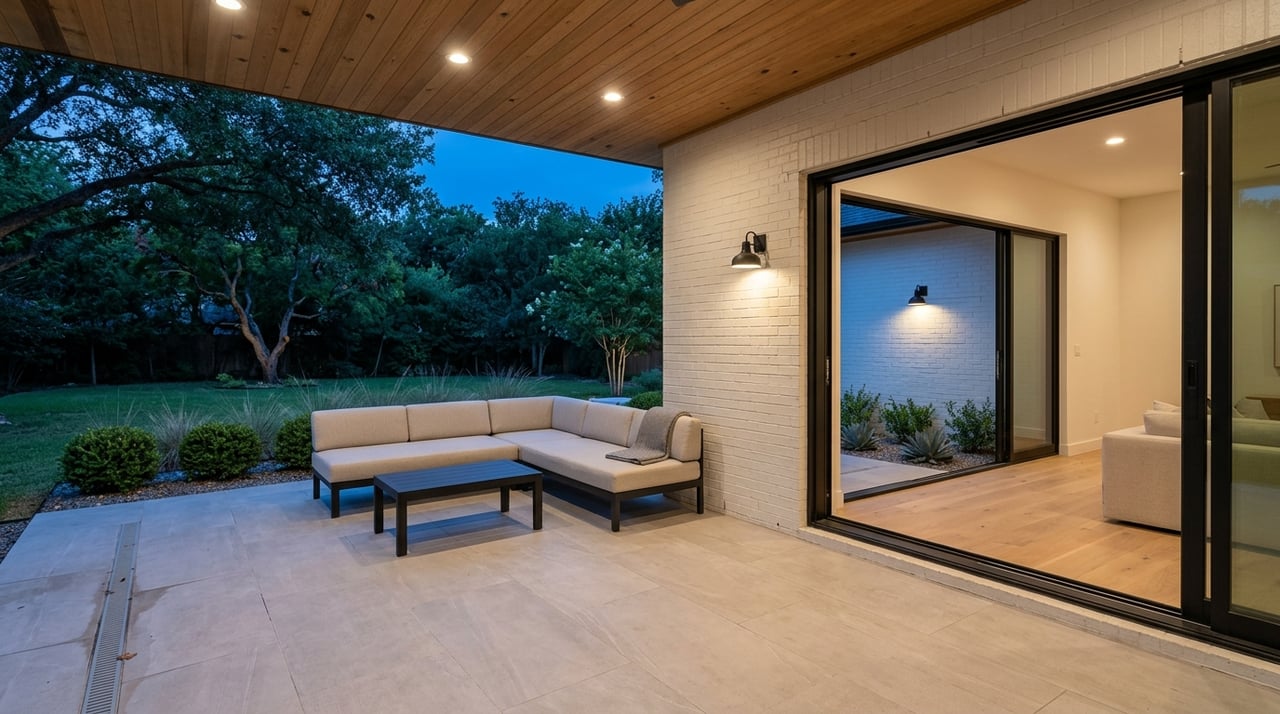
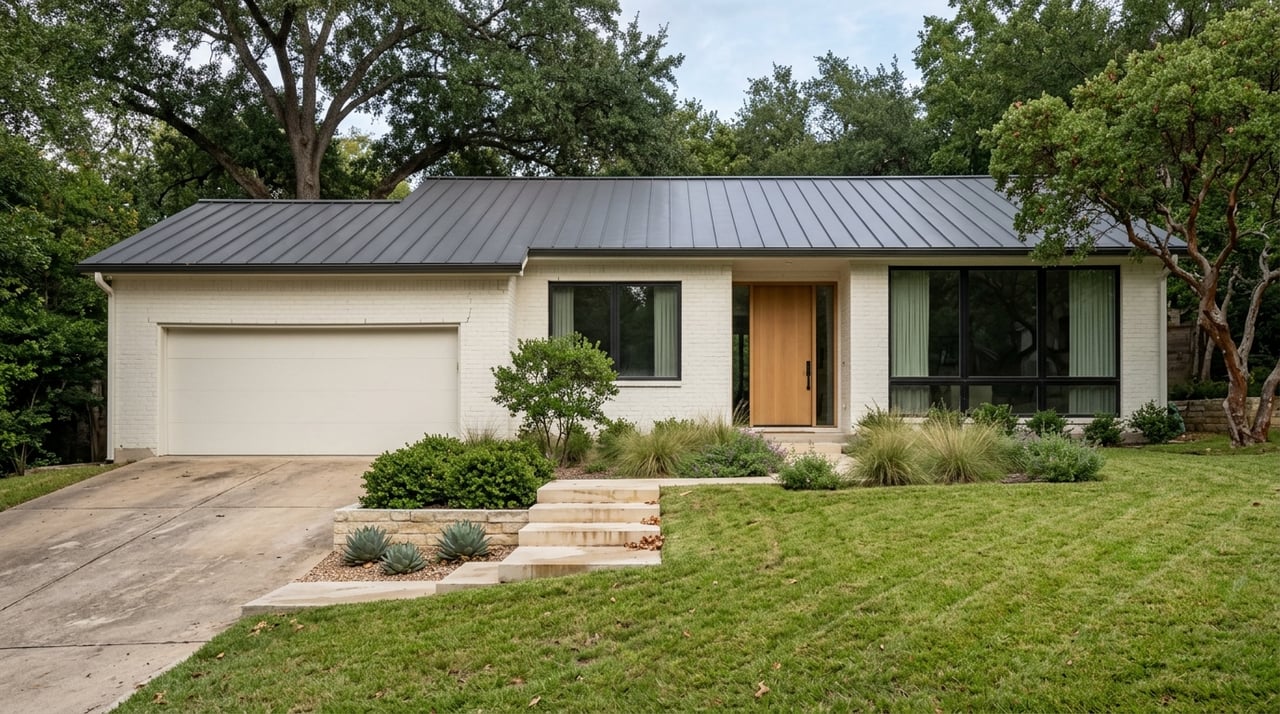
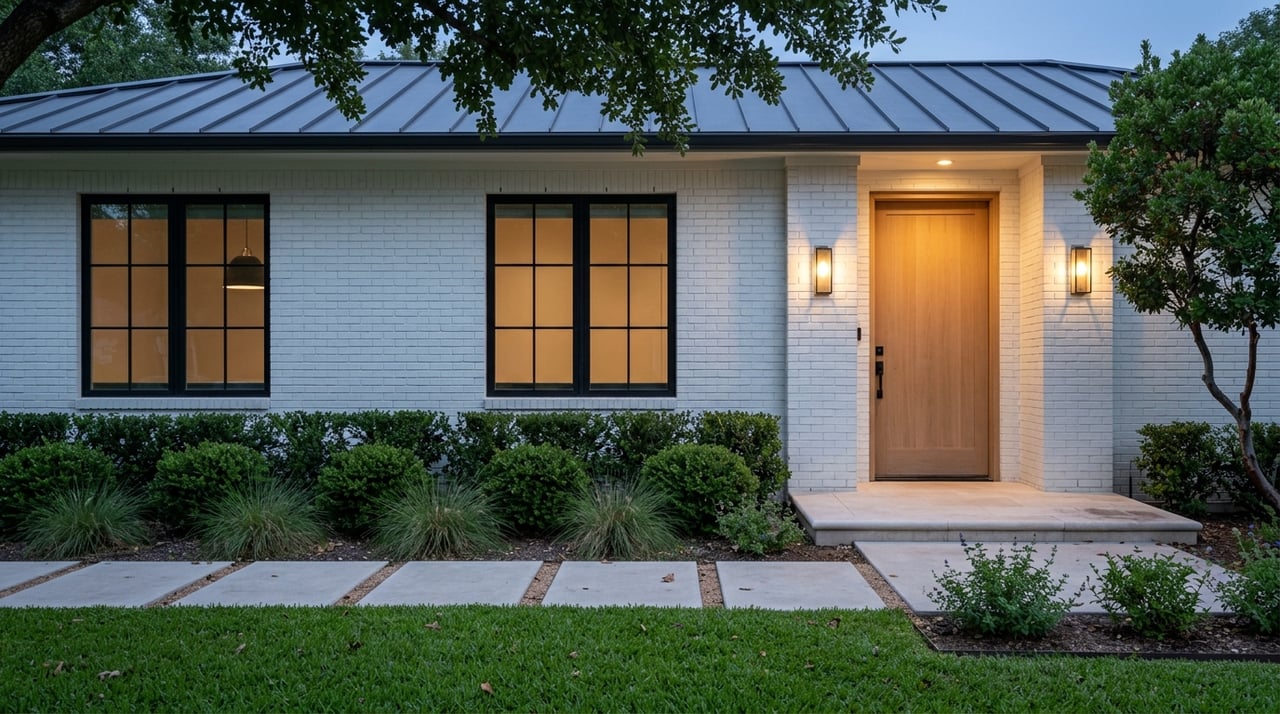
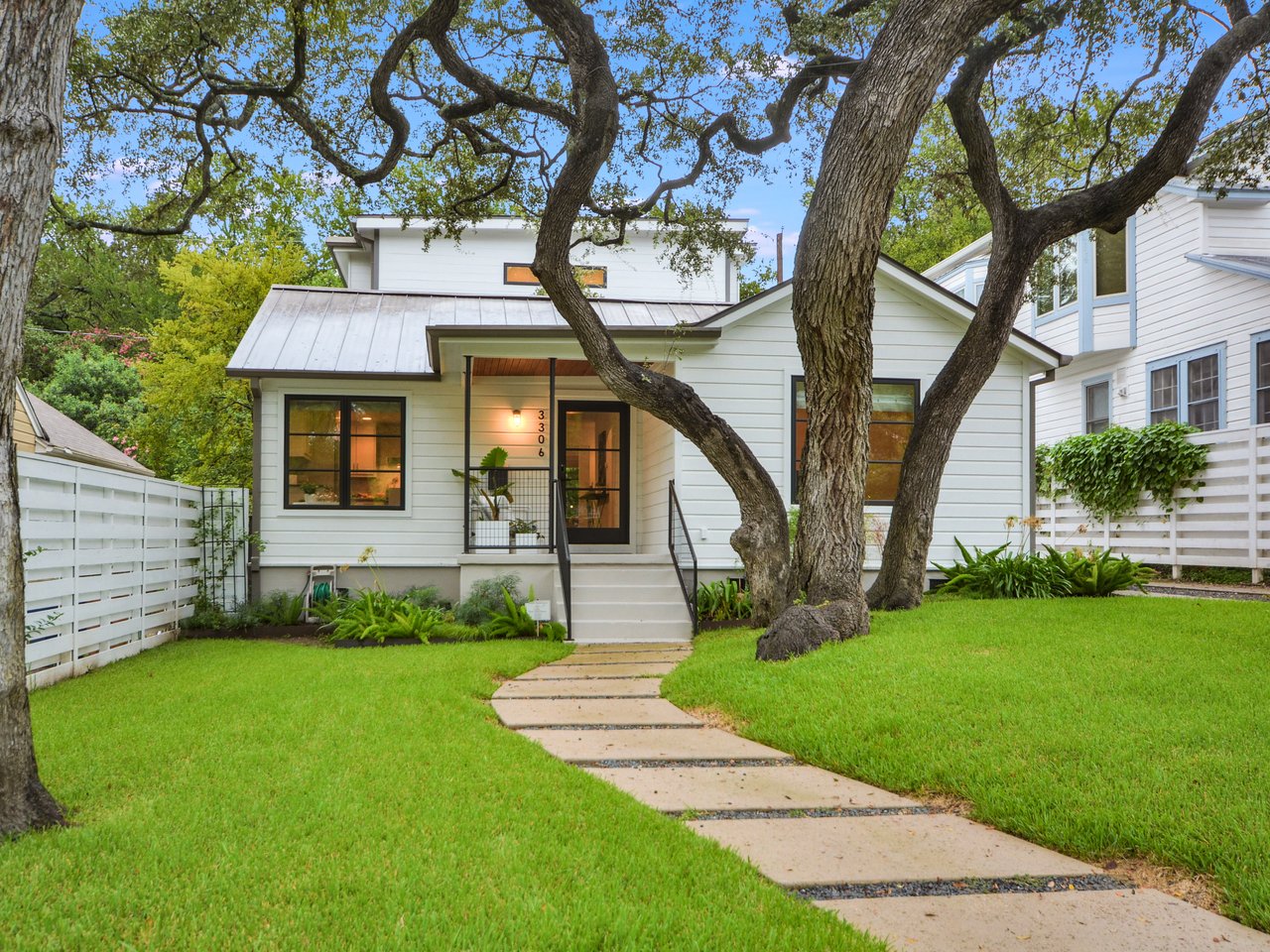
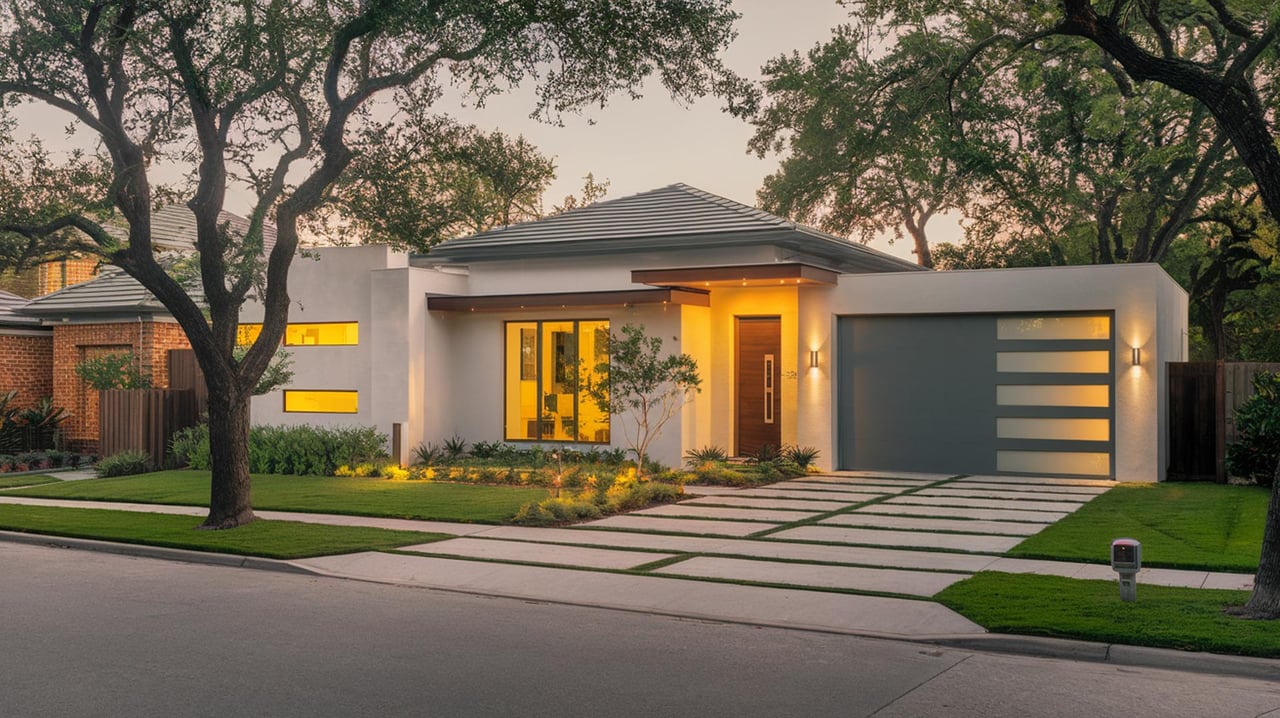
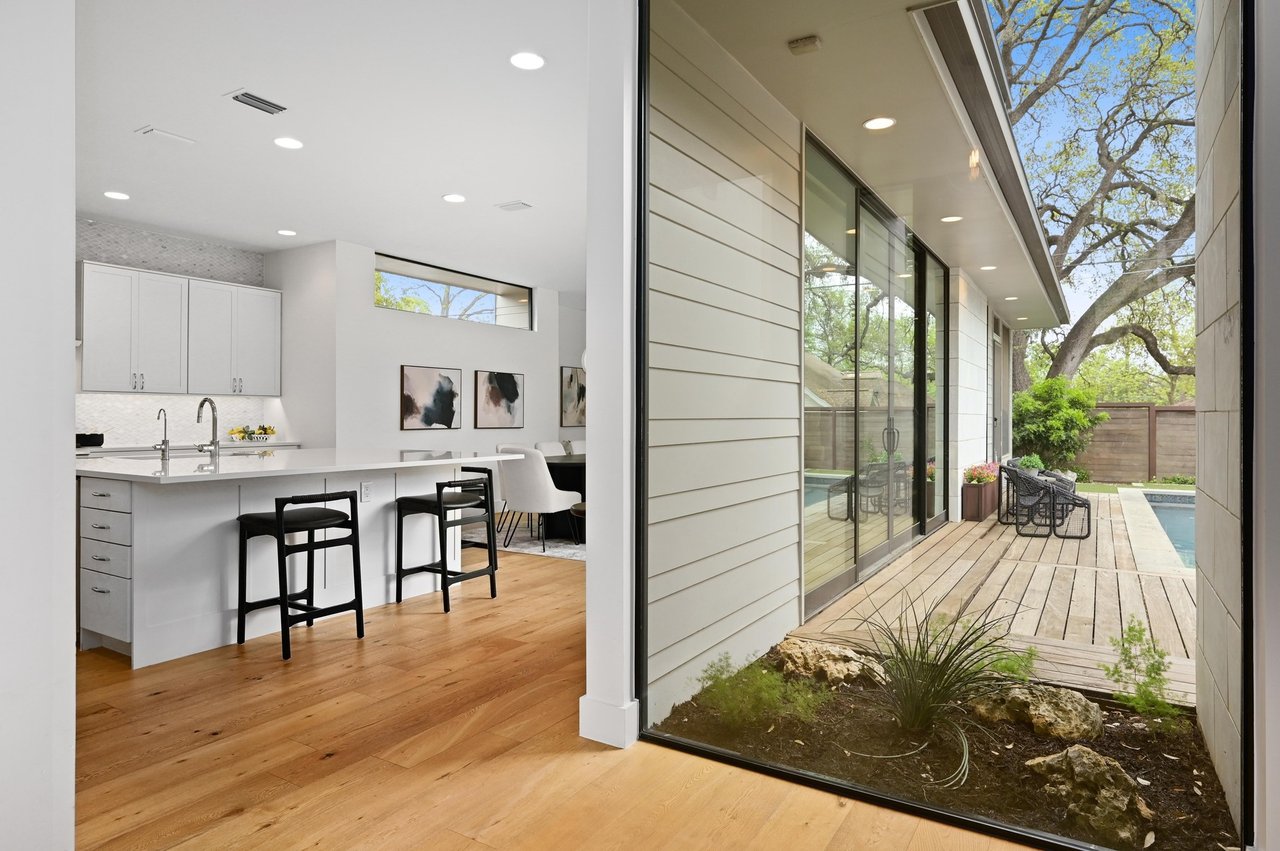
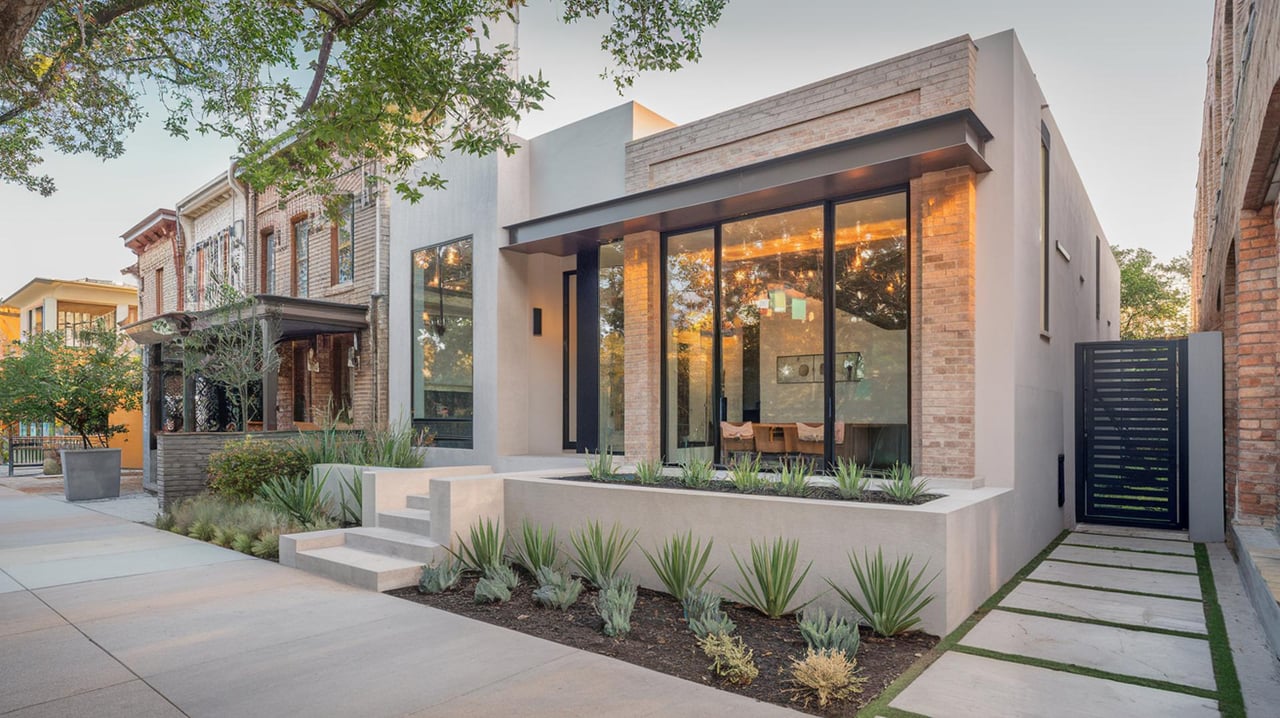
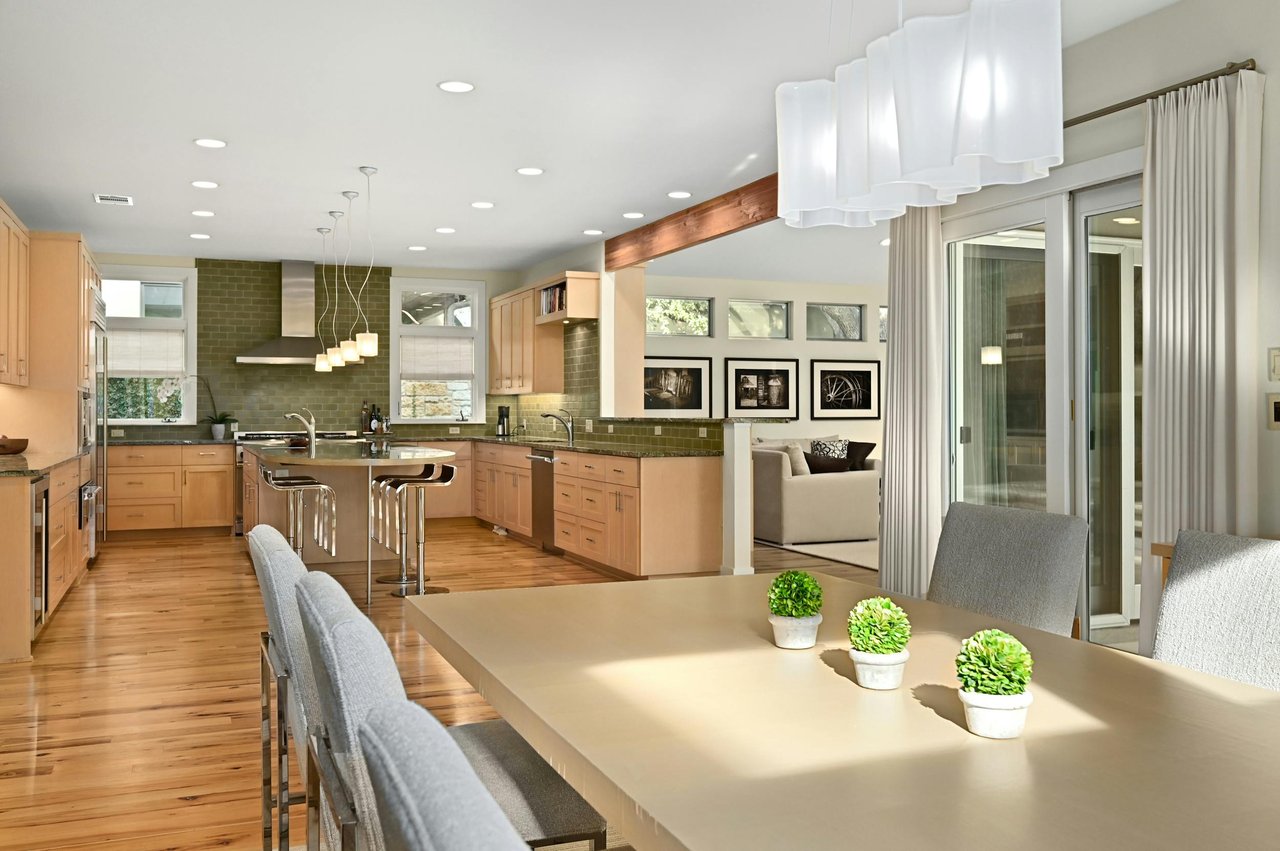
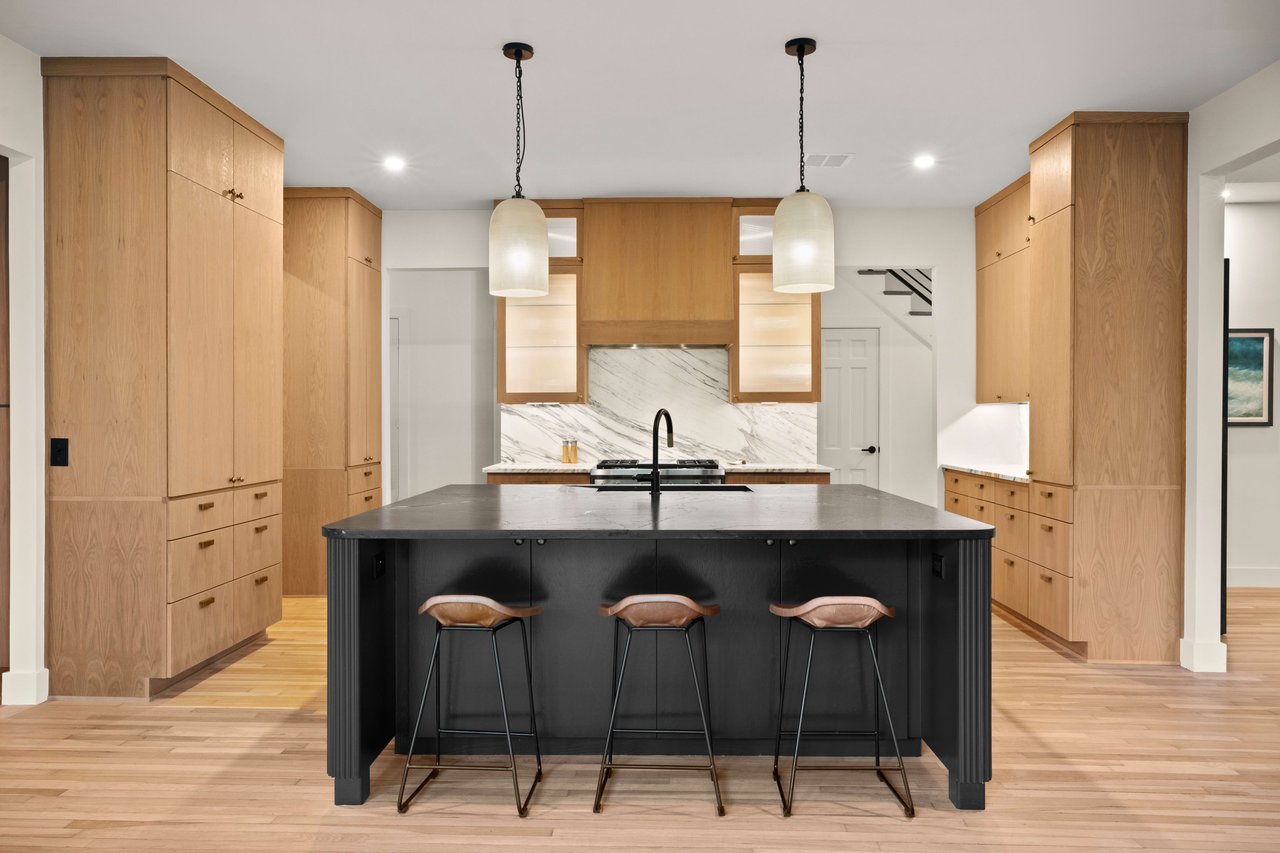
Austin Home magazine reported that when Dan and Sylvia Sharplin bought their lot on Castle Hill in 2016, the purchase came with a second property attached to it: a 1920s bungalow next door that the sellers had owned since the 1940s. What the Sharplins didn't fully grasp until later was that the bungalow carried an individual Historic Landmark designation inside the Castle Hill overlay, and that designation meant the Historic Landmark Commission had real authority over what happened to it next. The commission required the original wood-sided exterior be replicated, preserving the roofline, the dormer, and the wraparound porch, before any addition could go up behind it. The result is a home where the street-facing view looks like 1920s Clarksville and the back half is a 4,000-square-foot, glass-walled addition designed by LaRue Architects and built by Foursquare Builders.
That story is a useful test case, because it shows what "historic" actually costs and delivers when the designation has teeth. Most of Clarksville doesn't work that way. And the gap between those two realities is the thing buyers need to understand before they write an offer, not after.
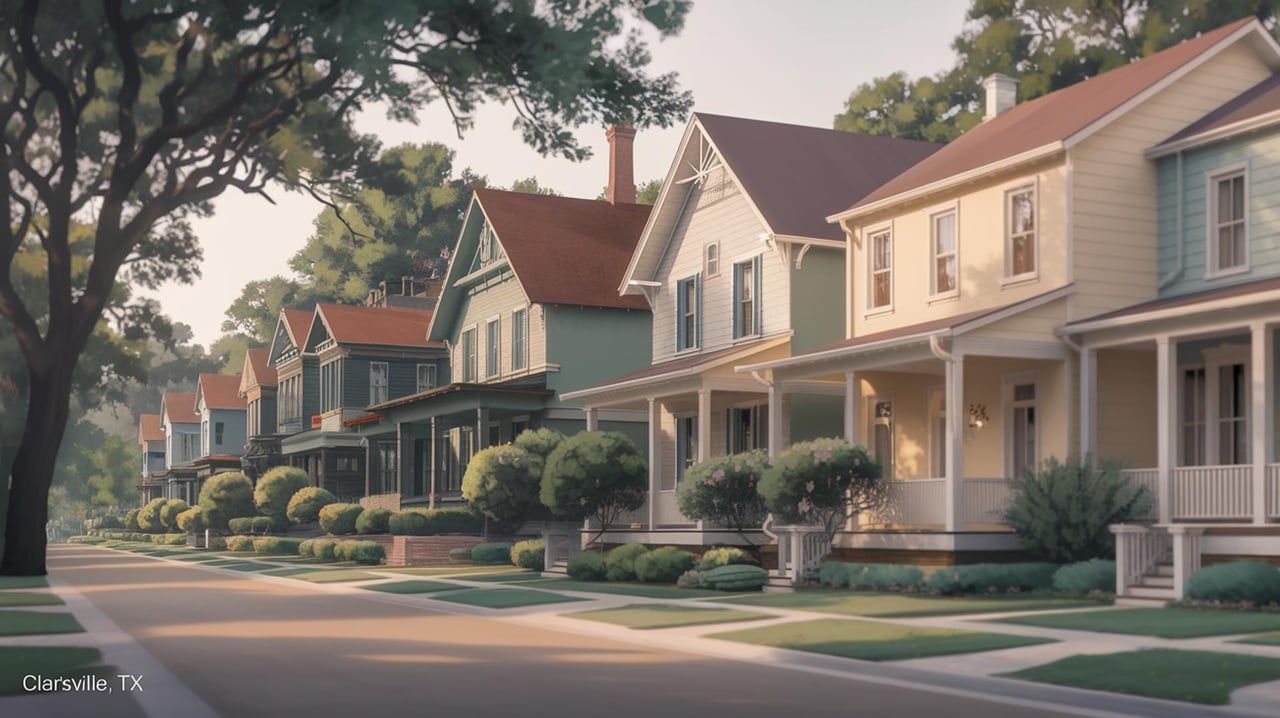
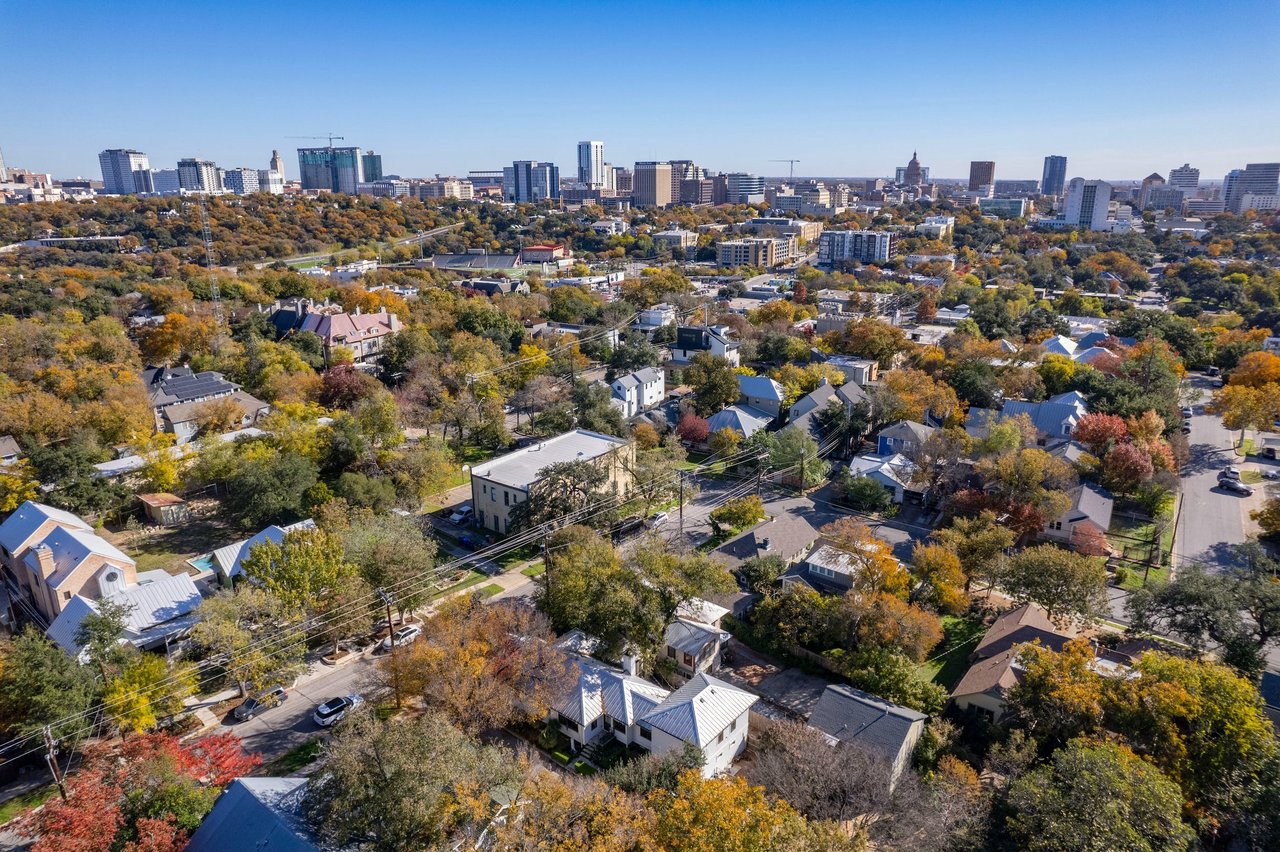
Clarksville sits inside the Old West Austin National Register Historic District, a federal designation that recognizes the neighborhood's architecture and its origin as one of the oldest surviving freedmen's towns west of the Mississippi. That listing matters for the neighborhood's identity and for buyers who care about the story behind the streets they're looking at. It does very little to constrain what a new owner can do to a house.
The City of Austin does require the Historic Landmark Commission to review exterior building, demolition, and relocation permits for properties inside National Register districts. But as Preservation Austin explains, the commission's role there is advisory. It can recommend steps to protect a historic property. It cannot require them. A homeowner in a plain National Register district who wants to tear down a contributing bungalow and build new can, in most cases, do exactly that after the review runs its course.
Individual Historic Landmark designation and local historic district zoning work differently. Inside the 39-acre Castle Hill Historic District, which contains 175 properties and 16 city landmarks including Fire House No. 4 and the Moonlight Tower at West 12th and Blanco, the City of Austin requires a Certificate of Appropriateness before issuing a building permit for changes to a contributing structure. A denial can be appealed to the relevant land use commission and, if that fails, to the City Council. This is not a suggestion. It is a gate.
So the word "historic" in a Clarksville listing might mean a discretionary, non-binding review, or it might mean a binding design process that dictates rooflines, siding, window replacement, and where a new addition can sit relative to the street. Two houses three blocks apart can carry entirely different legal realities under the same neighborhood description.
| National Register listing (Old West Austin) | Individual Landmark or Castle Hill local district | |
|---|---|---|
| Who reviews exterior permits | Historic Landmark Commission, advisory only | Historic Landmark Commission or HPO staff, binding |
| Can they block a project | No, they can only recommend | Yes; a denial can be appealed |
| Typical trigger | Exterior building, demolition, or relocation permits | Exterior work, demolition, or relocation on a contributing structure |
| Tax exemption eligible | No | Yes, for individually designated landmarks, per the City of Austin |
The Sharplins' project is instructive because it shows the mechanism working as designed rather than as a worst-case scenario. The commission didn't block the addition. It set the terms: keep the historic facade legible from the street, and build behind it. Architect James LaRue chose soft white stucco for the new construction specifically because it would read as compatible with the original wood siding rather than compete with it, and the finished home reads as two distinct eras stitched together rather than one disguised as the other.
That kind of outcome is common in Castle Hill and on other individually landmarked Clarksville addresses, and it's worth knowing going in that a Certificate of Appropriateness process adds real time to a renovation timeline. Applications go through a preliminary review by a three-member committee before a full Historic Landmark Commission hearing, and the commission generally meets once a month. A buyer planning a fast turnaround on a landmarked property should build that calendar into the offer, not discover it after closing.
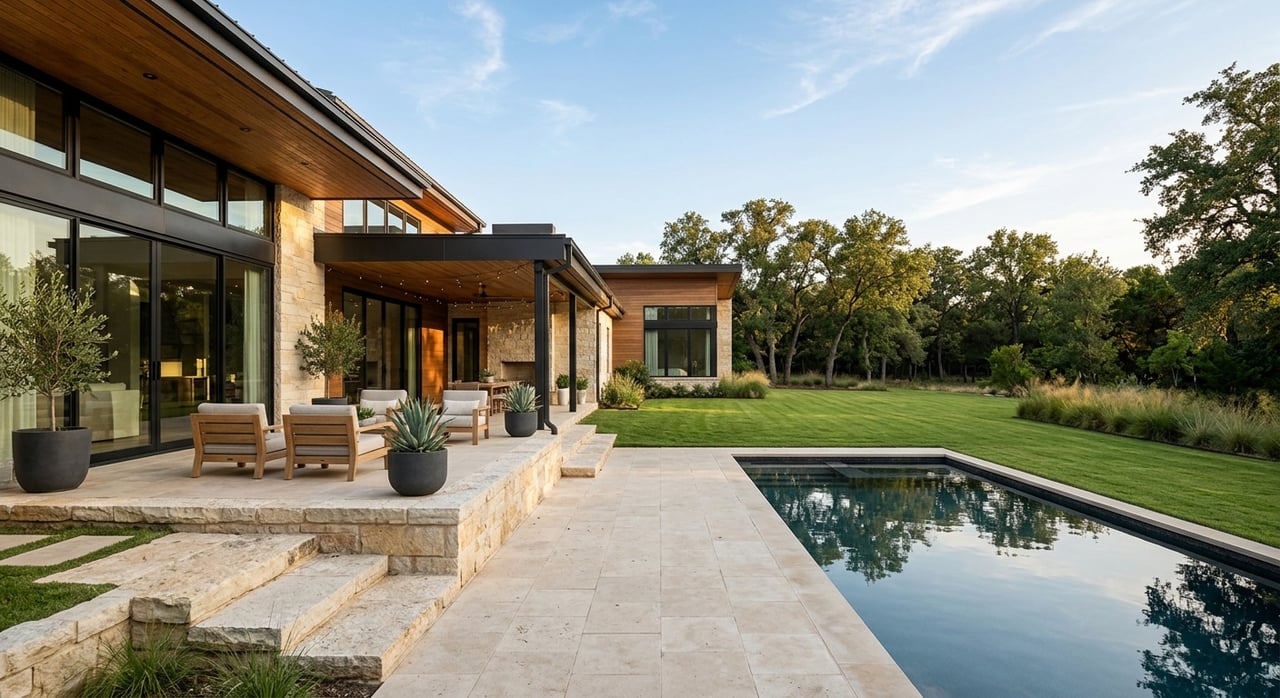
A separate 1915 Clarksville renovation, also designed by LaRue Architects and featured by One Kindesign, points to a different kind of friction that has nothing to do with historic status at all. That house sat on a steep hillside, nine feet off the ground at its lowest point, on a pier and beam foundation. The clay content in the soil, common across the neighborhood's hillier streets, is workable for pier and beam construction but complicates any addition or excavation, including the negative edge pool and floor to ceiling glass the owners eventually wanted. This is worth flagging because it applies whether or not a given address carries any landmark designation. Buyers who assume a clean National Register status means a straightforward renovation can still run into slope and foundation costs that have nothing to do with the Historic Landmark Commission.
The flip side of a binding designation is a real, quantifiable tax benefit, and it's the part of this conversation that gets skipped most often.
Owners of individually designated Historic Landmarks in Austin can receive a partial ad valorem property tax exemption from the city, Travis County, and the Austin Independent School District. For an owner-occupied landmark, the city and county exempt 100 percent of the structure's value and 50 percent of the land's value. AISD exempts 50 percent of the structure and 25 percent of the land. If the property was designated a landmark after 2004, or has changed ownership since 2004, the combined exemption is capped at $8,500 annually.
A University of Texas Entrepreneurship Clinic analysis of the program's 2023 numbers found a median tax break of $9,612 and an average of $16,358 per historic property that year, with the exemptions totaling roughly $9.9 million annually across all four participating taxing entities citywide. Those are 2023 figures, not current-year ones, but they show the scale of what's on the table for a property that qualifies.
Qualifying takes paperwork on a fixed calendar. The City of Austin requires owners to file a sworn affidavit with the city every January stating the property needs tax relief to encourage its preservation, then file a separate exemption application with the Travis Central Appraisal District by April 30 of the same year. City staff inspect every landmark property annually between September and December, and a property that fails inspection becomes ineligible for the exemption until repairs are made.
None of this benefit is available to a home that carries only the neighborhood's National Register status. Individually designated landmarks can also qualify for tax relief.
Given the spread between what a National Register listing requires and what an individual landmark or Castle Hill designation requires, checking a specific address's status is not optional due diligence. It's the single fact that changes both the renovation math and the ongoing tax bill for that property, and it isn't something a listing description reliably surfaces. The City of Austin's Historic Preservation Office and the zoning profile lookup on the city's development site can confirm a given address's status directly, and that confirmation should happen before an offer goes in on anything with visible age or character in this neighborhood.
Does being in Clarksville automatically mean I need commission approval to renovate? No. Most of Clarksville sits inside the Old West Austin National Register district, where the Historic Landmark Commission reviews exterior permits but can only recommend, not require, protective measures. Binding review only applies to individually designated landmarks and to properties inside a local historic district like Castle Hill.
How do I find out if a specific house carries a binding designation? Contact the city's Historic Preservation Office directly or pull the property's zoning profile through the city's development site. Designation status is tied to the specific address, not to the neighborhood as a whole, so a general Clarksville search won't answer this.
If my house isn't a landmark, can I still get any tax benefit for owning an old home? The ad valorem exemption described here is specific to designated Historic Landmarks. A property with only National Register status in its neighborhood doesn't carry that exemption on its own.
If you're weighing a specific Clarksville address and want a straight answer on what its designation status actually permits, Anna Lee can walk through the record with you before you write anything. Schedule a private consultation to talk through the specific house, not the neighborhood in general.
This article is general information, not legal, tax or financial advice. Consult a qualified professional about your situation.
3825 Lake Austin Blvd Ste 501 Austin TX 78703
3825 Lake Austin Blvd Ste 501 Austin TX 78703